首頁 > Knowledge Hub
Knowledge Hub | Prebiotics: Definition and Introduction
Knowledge Hub
Explore the science behind prebiotics, probiotics, and postbiotics—three distinct approaches to supporting gut health and overall wellness.
- Prebiotics: Definition and Introduction
- Probiotics: Live Microorganisms and Function
- Postbiotics: Scientific Scope and Categories
WHAT ARE PREBIOTICS?
Prebiotics are substrates that are selectively utilized by host microorganisms, conferring a health benefit.
-
SELECTIVE FERMENTATIONPrebiotics are not digested by the host but are fermented by beneficial gut bacteria, promoting their growth and activity.
-
HEALTH BENEFITSSupport digestive health, enhance mineral absorption, modulate immune function, and may influence metabolic health.
-
COMMON TYPESInulin, fructooligosaccharides (FOS), galactooligosaccharides (GOS), and resistant starches are well-studied prebiotics.
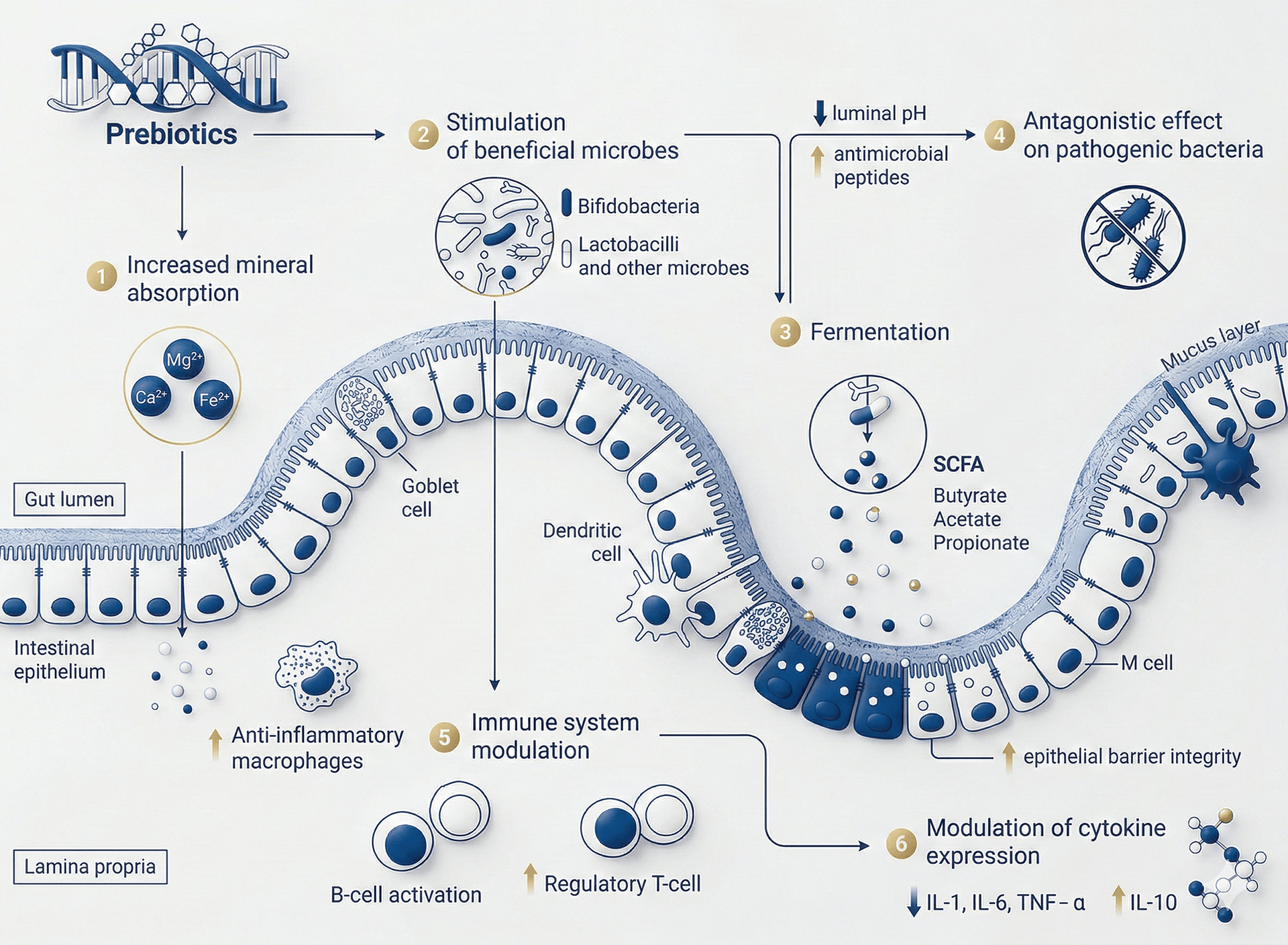
Mechanisms of Prebiotic Action
- Mineral Absorption: Improves solubility and uptake of Ca2+, Fe2+, and Mg2+.
- Beneficial Microbes: Provides selective substrates to promote healthy gut flora growth.
- SCFA Production: Generates energy for colonocytes and supports mucosal integrity.
- Pathogen Growth: ↓ Luminal pH and ↑ antimicrobial peptide production.
- Immune Modulation: ↑ Epithelial barrier integrity, ↑ dendritic cell/B-cell activity, and T-reg differentiation.
- Cytokine Regulation: ↓ Pro-inflammatory markers (IL-1, IL-6, TNF-α) and ↑ anti-inflammatory IL-10.
Reference: Nutrients 2026, 18(3), 372
WHAT ARE PROBIOTICS?
Probiotics are live microorganisms that, when administered in adequate amounts, confer a health benefit on the host.
-
STRAIN-SPECIFICBenefits depend on the specific genus, species, and strain. Not all probiotics work the same way.
-
EFFECTIVE DOSEPotency should be guaranteed through the "best by" date, not just at the time of manufacture.
-
FUNCTIONAL DIVERSITYBeyond digestion, they support immune function and vitamin production.
Probiotics: A Functional Roadmap for Maintaining Gut Health
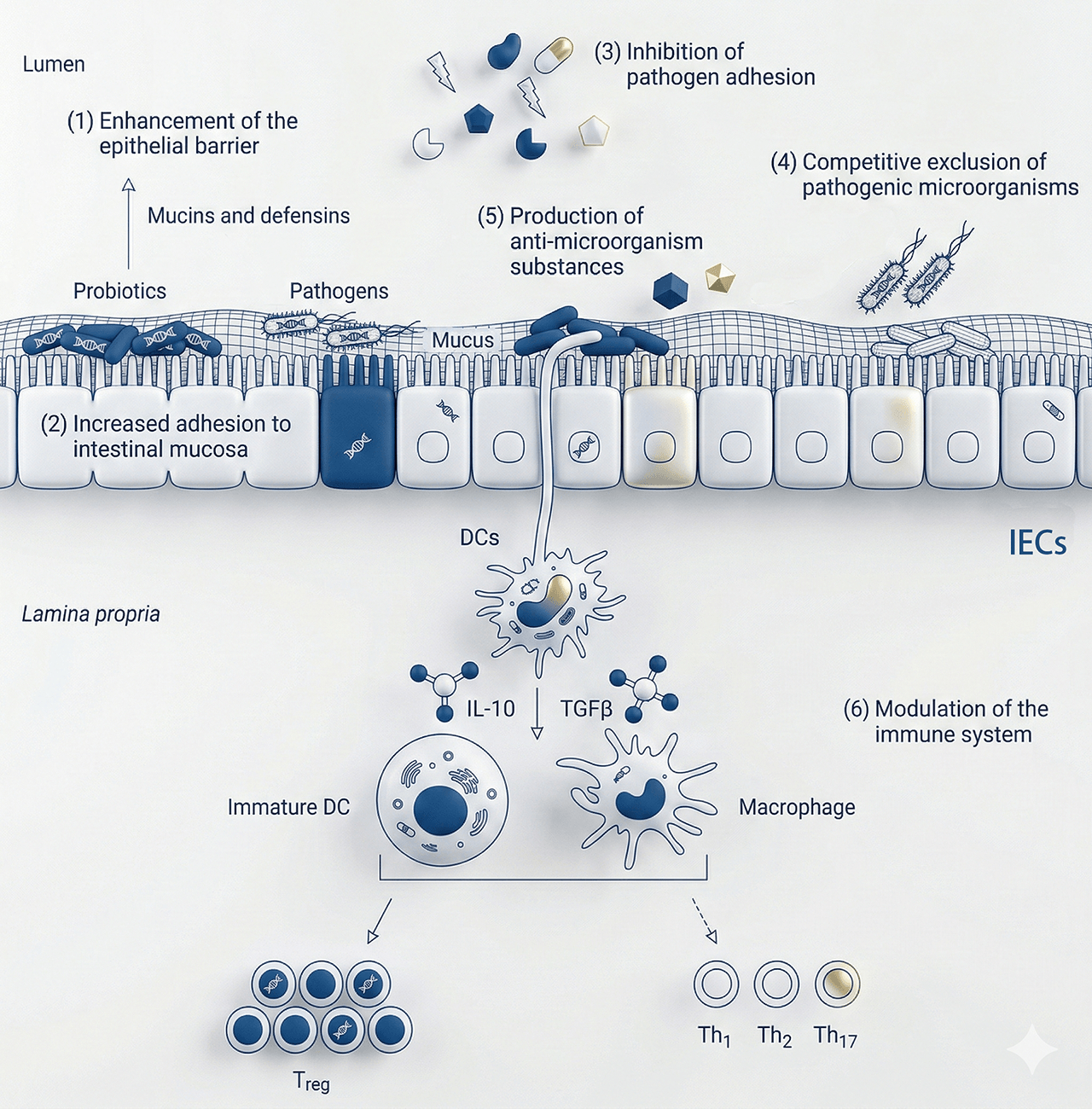
Reference: Ann Nutr Metab. 2012;61(2):160-74.
WHAT ARE POSTBIOTICS?
Postbiotics are defined as a preparation of inanimate microorganisms and/or their components that confers a health benefit on the host, distinguishing them from probiotics which must be alive at administration.
-
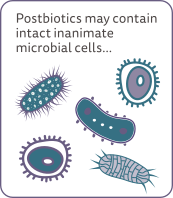 Inanimate
Microbial Cells -
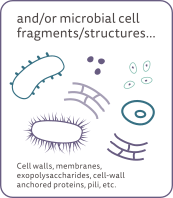 Microbial Cell
Fragments -
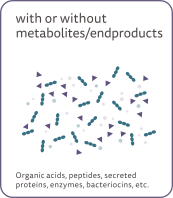 Metabolites
This definition captures intact or fragmented microbial cells and associated bioactive constituents produced during fermentation, while excluding purified single chemicals, vaccines, and viruses.
(Reference: ISAPP)
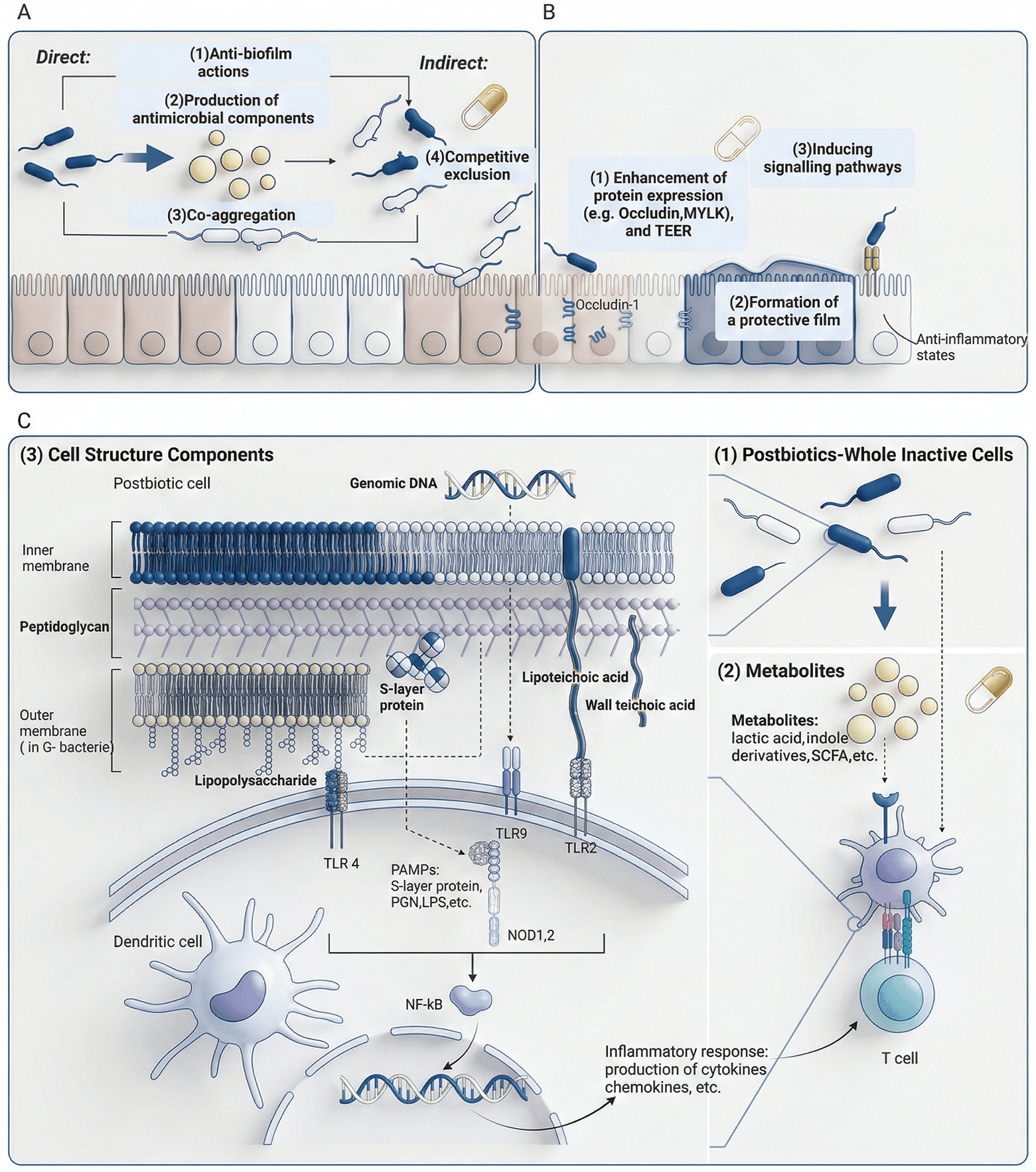
Reference: Nutrients 2023, 15(2), 291.
HOW THEY WORK
-
MODULATE RESIDENT MICROBIOTADirectly balances the intestinal flora through antimicrobial compounds, while indirectly supporting beneficial short-chain fatty acids.
-
CALIBRATE IMMUNE RESPONSESInteract with immune cells to fine-tune the body's defenses.
-
ENHANCE EPITHELIAL BARRIER INTEGRITYStrengthen the gut lining to improve its protective barrier.
-
IMPACT METABOLIC PATHWAYSInfluence metabolism and contribute to important body signals, like gut-brain communication.
SAFETY, QUALITY & THE BOTTOM LINE
SAFETY YOU CAN TRUST
-
FAVORABLE SAFETY PROFILE:No replication; each requires preparation-specific assessment.
-
TOXICITY TESTING:3-strain postbiotic showed no adverse findings in acute/subchronic tests; no detectable biogenic amines.
-
REGULATORY GUIDANCE:Emphasizes strain-level identification, inactivation, and GMPs.
QUALITY & LABELING CUES
-
LOOK FOR:
- • Progenitor genus–species–strain
- • Postbiotic type
- • Quantification units
- • Guaranteed amounts through shelf life
-
DISCLOSURE:Intentional inactivation & standardized enumeration at regulatory level.
-
ALIGNMENT:Adherence to 2021 ISAPP definition for clarity.
-
Knowledge Hub
Prebiotics: Definition and Introduction
-
Knowledge Hub
Probiotics: Live Microorganisms and Function
-
Knowledge Hub
Postbiotics: Scientific Scope and Categories